






Donald Trump’s sweeping 2024 win cannot be traced to only one cause. The failures of the Biden administration, as well as the weakness of Kamala Harris as a candidate, heavily contributed to the dominant victory for Trump and the Republicans. But one factor that cannot be ignored is the impact of the podcasting landscape on the electoral process. Trump went on more than 30 podcasts during the election cycle, while Harris shied away from the new media landscape and ran to the safety of short, mainstream media interviews. This boded well for Mr. Trump, as his poll numbers remained strong throughout the process and flowered into an electoral win in which he won every battleground state.
Taking a step back, it is mind-blowing that podcasts and new media would have such an impact. But the numbers don’t lie—86% of adults consume media through digital devices, while 55% of them get their news from social media. These are outstanding numbers.
The popularity of new media leaned heavily to Trump’s advantage. Kamala Harris is an empty suit and has trouble communicating a coherent argument. Trump is an entertainer. He also comes off as far more authentic because of his style. All of these factors contributed to why Trump benefited from going on podcasts.
The podcast world is vast and diverse, with a plethora of differences of opinion on various issues.
At this moment in time, we have seen a huge splinter among right-of-center podcasters. The issue of Israel has been a major point of contention. As much as I believe that this issue can cause division, I also believe that it is a distraction from the real issue between these figures. I believe that many of these figures can be put into categories of anti-conventionalist, conventionalist, and opportunists.
The term “conventionalist” is often misunderstood, but I use it in a specific way. When I bring up the term, I am talking about established ways of thinking. I am not referring to political parties or institutions.
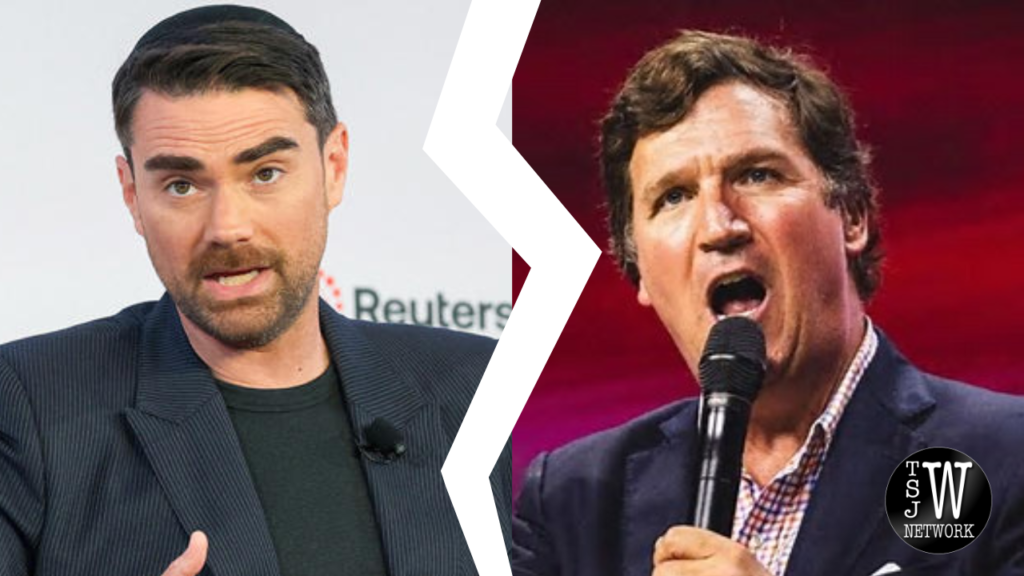
An example of a “conventionalist” figure in the right-wing podcast wars is Ben Shapiro. Shapiro is the best example because of his overwhelming consistency. He is not one to switch up his opinions, which is a very respectable trait, as you know where he is coming from. However, he is a conventionalist figure in my eyes because he tends to follow established narratives, leans toward conventional ways of thinking, and those ways of thinking are often aligned with well-funded interests.
This is not a shot at Shapiro. Again, there is no evidence of a shift in his opinions since he was 17 years old writing columns at UCLA.
Shapiro is a hawk and could easily be accused of being a neo-con. He also notoriously promoted the COVID vaccine, which I believe cost him a lot of his support.
Obviously, Shapiro is a staunch supporter of the state of Israel, as he is a practicing religious Jew. This has been the main point of contention for him.
Shapiro’s rise came from his arguments in favor of capitalism and his debates with SJWs, where his quick-witted arguments and fast talking dazzled viewers and earned him trust and fandom. This allowed him to establish The Daily Wire, which has blossomed into a successful conservative media operation.
The leading example of an “anti-conventionalist” podcaster right now is Tucker Carlson. Carlson is an interesting case because he has had significant shifts in philosophy, unlike Shapiro. These shifts have come from new experiences in the media landscape. He jumped around news stations and witnessed how news agencies operated. He was also able to be publicly wrong on issues, such as the Iraq War, and learn from those mistakes.
Carlson’s transformation could be seen in real time while he was host of “Tucker Carlson Tonight” on Fox News. He became increasingly less trusting of official narratives, especially when it involved COVID policy. He began to push the envelope on Fox News, a highly conventionalist and pro-war news channel. Eventually, he was fired.
Carlson returned to the public by first launching his “Tucker on X” show before creating the Tucker Carlson Network and the “Tucker Carlson Podcast,” which he now operates. This podcast has been nothing short of a wild success, with hundreds of thousands of viewers tuning in within one hour of upload.
Carlson is a skeptic who is open to more conspiratorial thinking. He can also be a confrontational interviewer, as we have seen with Ted Cruz and Mike Huckabee. Carlson has been increasingly skeptical of Israel and its influence on American leaders. This has been a big cause of his rift with Shapiro and others.
But there is more to it. Tucker invited Darryl Cooper, a non-mainstream historian, onto his podcast. Cooper made the claim that Winston Churchill was the “chief villain” of the Second World War—a remarkable statement. This was a clip that went viral, particularly out of context. His explanation was coherent and actually thought-provoking, but most did not get the full context. These types of things have drawn the ire of many of the more “conventionalist” figures, such as Shapiro.
The opportunists have made this fight messy. Good examples of these are figures like Megyn Kelly and Piers Morgan. Both Kelly and Morgan were mainstream media figures who were fired, leading to their entrance into the new media scene.
Morgan has a show called “Piers Morgan: Uncensored,” where he brings on a plethora of political commentators from different points of view. These discussions often veer into wild banter, which can be entertaining but is not often productive. Morgan garners millions of views on his content and has used the division as a moneymaker for himself.
Kelly has been something of a chameleon, as she often shifts her opinions to align with what is more popular. She was once supportive of transgender issues and even featured transgender children on her NBC show. Now, she presents herself as strongly anti-trans. She is also emerging as more of a skeptic on Israel, even though she was staunchly pro-Israel until public opinion began to shift. This has drawn criticism toward her, which she does not always handle gracefully.
Israel has been the main focus of these differences. Tucker Carlson could be accused of being anti-Israel. However, I believe there is more evidence that the division is really about conventional ways of thinking versus non-conventional ways of thinking. These discussions are important if we are to have them at all. The problem is with the opportunists.